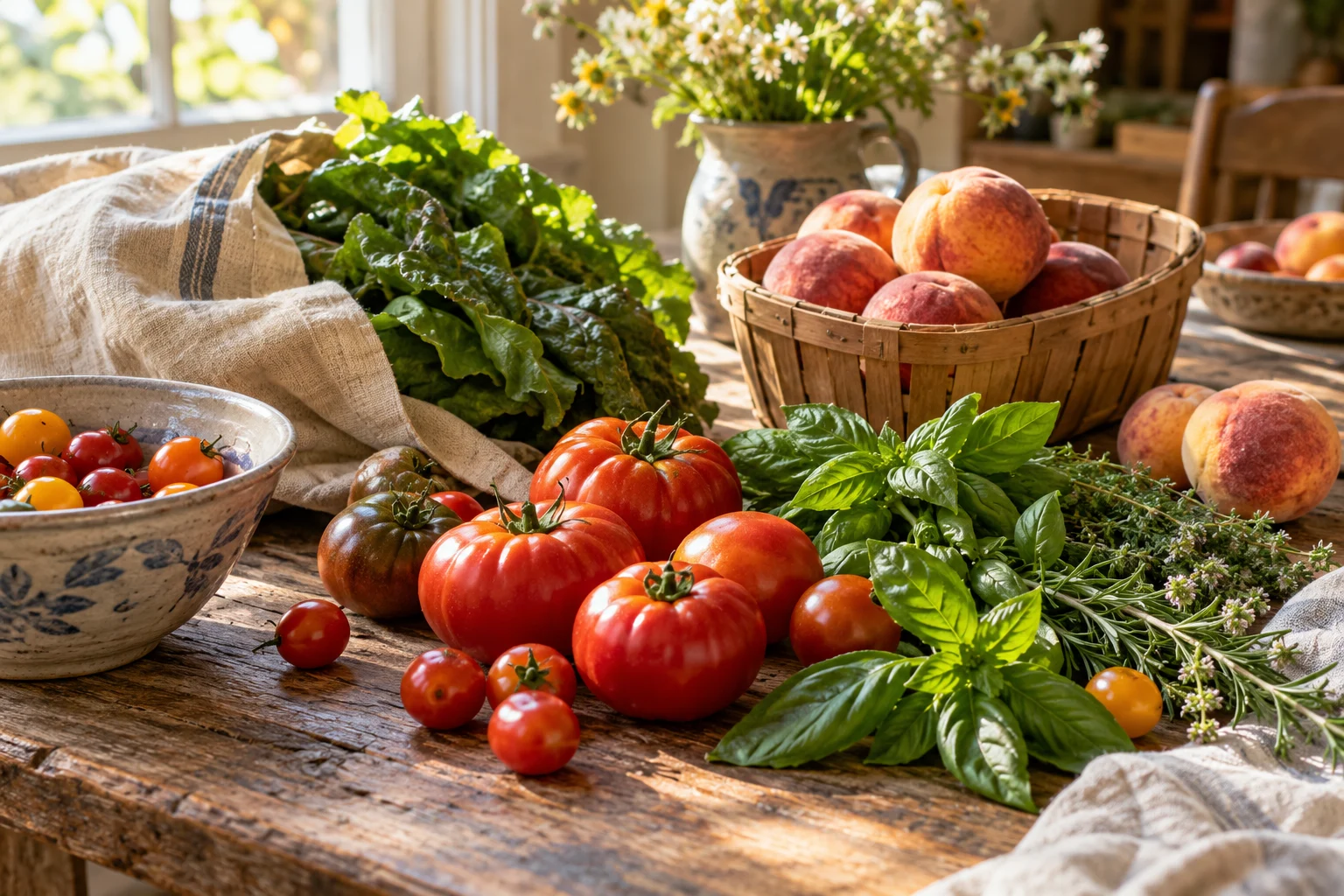
The act of walking through a local market often presents a fundamental choice: do you shop for a specific recipe, or do you shop for potential? For many, the impulse is to gather a wide array of single-use items that satisfy a single craving, only to find the basket heavy with components that lack a second purpose. There is a quiet efficiency to be found in narrowing your focus to a core set of ingredients that can pivot between different culinary directions.
The tradeoff of variety and utility
This decision-making process requires a shift in perspective, moving away from buying for a single menu and toward buying for a set of versatile flavors. The primary tradeoff involves the tension between immediate variety and long-term utility. A large basket filled with highly specialized produce offers immediate gratification for one planned dinner, but it risks leaving you with leftover components that do not easily integrate into the next day's meal. A smaller, more intentional basket requires more creativity, but it ensures that every item earns its place on your counter and contributes to multiple outcomes.
When you are separating essentials from optional additions, you are essentially deciding how much work you want to do at the stove versus how much you want to do at the checkout counter. The essentials provide the foundation, while the optional additions provide the nuance. The goal is to find the sweet spot where your core ingredients are substantial enough to be the star of a meal, yet flexible enough to act as a supporting player later in the week.
A study in ingredient utility
To understand how this works in practice, consider the way a few specific items can be reconfigured. For example, if you select a bag of arugula, a block of firm cheese, and a bag of walnuts, you have not just bought three items; you have bought several distinct dining experiences.
Imagine you start your week with those ingredients. On Monday, the arugula, cheese, and walnuts serve as a sharp, textured salad. On Tuesday, the same cheese and walnuts can be shaved over a warm bowl of grains or pasta, or the greens can be wilted into a quick sauté to accompany a different protein. By selecting items that possess enough character to stand alone but enough flexibility to blend into different textures, you maximize the value of every item in your basket.
Refining your market strategy
The challenge arises when you must decide whether to prioritize the base ingredients that provide the bulk of the meal or to allocate your resources toward the aromatics and garnishes that provide the nuance. If you find yourself stuck between two different paths, consider the overlap of your choices. A single bulb of garlic or a bottle of high-quality oil can bridge the gap between a light, Mediterranean-style spread and a more robust, savory dish. These are the items that turn a collection of separate ingredients into a cohesive pantry.
Before your next trip to the store, look at your current supplies and decide which direction your week is heading. Are you looking for a series of quick, light assemblies, or are you planning for heavier, more complex preparations? By deciding on a theme rather than a specific menu, you can select a basket that offers more than one possible meal. Once you have identified your core ingredients, ask yourself how many different ways they can be reconfigured before the week is out. This approach ensures that your market trip is an investment in versatility rather than a collection of one-off items.